
Marble Hall Murders by Anthony Horowitz | PBS Books Readers Club
Season 2026 Episode 32 | 26m 10sVideo has Closed Captions
PBS Books Readers Club welcomes bestselling mystery author Anthony Horowitz
PBS Books Readers Club welcomes bestselling mystery author Anthony Horowitz to discuss his latest novel. Marble Hall Murders is the third and final novel in Anthony Horowitz’s Magpie Murders series, which follows book editor Susan Ryeland and detective Atticus Pünd in a mind-bending mystery that links the past and present.
Problems playing video? | Closed Captioning Feedback
Problems playing video? | Closed Captioning Feedback
Marble Hall Murders by Anthony Horowitz | PBS Books Readers Club
Season 2026 Episode 32 | 26m 10sVideo has Closed Captions
PBS Books Readers Club welcomes bestselling mystery author Anthony Horowitz to discuss his latest novel. Marble Hall Murders is the third and final novel in Anthony Horowitz’s Magpie Murders series, which follows book editor Susan Ryeland and detective Atticus Pünd in a mind-bending mystery that links the past and present.
Problems playing video? | Closed Captioning Feedback
Where to Watch PBS Books
PBS Books is available to stream on pbs.org and the PBS app.
Providing Support for PBS.org
Learn Moreabout PBS online sponsorshipMore from This Collection
The PBS Books Readers Club is a monthly digital-first series that brings its members into conversations behind the stories of your favorite books & shows. You can watch the online on the PBS App, with extended interviews available for PBS members on PBS Passport.
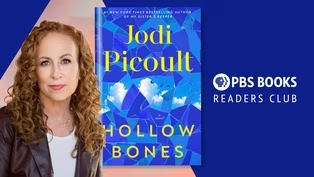
Readers Club Episode 309 Hollow Bones | Jodi Picoult
Video has Closed Captions
PBS Books Readers Club welcomes prolific author Jodi Picoult to discuss her newest novel (46m 12s)

Video has Closed Captions
PBS Books Readers Club welcomes author Andy Weir to discuss his best-seller Project Hail Mary (40m 24s)
Readers Club Episode 307: Booking It Across America
Video has Closed Captions
This month, PBS Books Readers Club celebrates America 250 with a special episode (15m 49s)
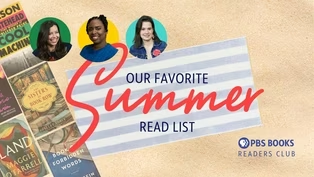
READERS CLUB Episode 306 : Our Favorite Books for Summer
Video has Closed Captions
Our hosts of the PBS Books Readers Club, share their perfect picks to binge beachside this summer (18m 45s)
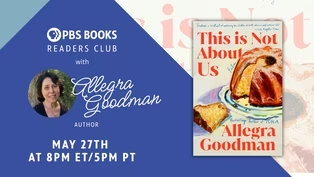
Readers Club 305: This Is Not About Us | Allegra Goodman
Video has Closed Captions
New York Times bestselling author Allegra Goodman of Sam and Isola to discuss her brand-new novel (36m 31s)
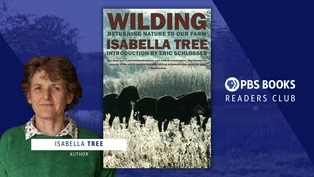
Readers Club 304: Wilding | Isabella Tree
Video has Closed Captions
PBS Books Readers Club welcomes British author and conservationist Isabella Tree (33m 17s)
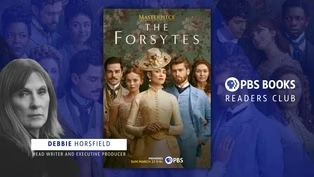
Readers Club- Debbie Horsfield | The Forsytes
Video has Closed Captions
The PBS Books Readers Club takes on John Galsworthy's classic novel series The Forsytes. (32m 36s)

Readers Club | 302 Book Picks for Black History Month with Lauren Smith and Princess Weekes
Video has Closed Captions
PBBS Books Readers Club recommend their favorite Black History Month reads. (16m 16s)
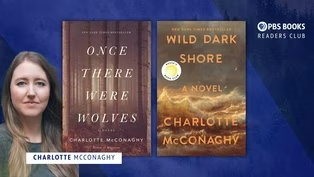
Readers Club | Ep 301: Charlotte McConaghy | Once There Were Wolves
Video has Closed Captions
PBS Books Readers Club hosts author Charlotte McConaghy to discuss her novel Once There Were Wolves. (58m 55s)

Readers Club | Ep. 212: Our Favorite Books of 2025
Video has Closed Captions
PBS Books Readers Club celebrates the wrap of its second season with a highlight of 2025 (47m 55s)
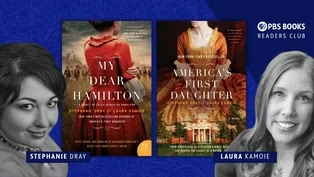
Readers Club | Ep. 211: America's First Daughter | Stephanie Dray & Laura Kamoie
Video has Closed Captions
PBS Books Readers Club welcomes co-authors Stephanie Dray and Laura Kamoie (1h 1m 45s)
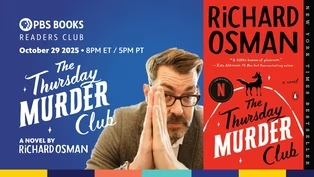
Wed Oct 29 2025 | Readers Club | Ep. 210: Richard Osman | Thursday Murder Club
Video has Closed Captions
PBS Books Readers Club welcomes celebrity writer Richard Osman to discuss his best-selling novel (52m 44s)
Providing Support for PBS.org
Learn Moreabout PBS online sponsorship(bright music) - Telling a murder story is one thing, and I try to do it as well as I can.
I do love the whole panoply of a good murder mystery, but I like there to be something more as well, something about the real world, something that perhaps people don't know, which can be added to the story and make it, I don't know, deeper, thicker, more complex.
(bright music) - Hello and welcome to the PBS Books Readers Club.
Today, we're stepping into a world of secrets, suspects, and the very mysterious Marble Hall, as we welcome bestselling author Anthony Horowitz.
He's here to talk about "Marble Hall Murders," the thrilling final installment in his Magpie Murder series and the new PBS series it inspired.
It's suspenseful, smart, and a perfect cozy murder mystery.
Have you had a chance to read "Marble Hall Murders?"
Tell us what you thought about it in the chat or comments.
Also, have you read any of Anthony Horowitz's other books and do you have a favorite?
I'm Lauren Smith and joining me today for our conversation with Anthony Horowitz is Heather Marie Montilla.
Hi, Heather.
It's so good to have you back.
- Hey, Lauren.
It's so great to be back on the PBS Books Readers Club.
I'm so happy to be here, and I'm so excited to get to speak again with Anthony Horowitz.
- Yeah, so tell me, what did you think of "Marble Hall Murders?"
- I loved it.
I mean, this is the third one I've read in this series, but I read almost all of his books.
- Me too.
Yeah.
- It is, he's so clever.
He's so smart.
He puts... It's fair play, right?
Mystery.
He puts it all there so along the way you can guess the ending, but I like to go back.
- I never do.
Do you?
- I do.
I do.
(laughs) (Lauren laughing) - This (indistinct).
- You're smarter than me.
- No, but I don't know.
I guess I feel like he's so clever, but I'm like now in his head a little bit, like, what is he doing?
Why is this character there?
Like I love him and I love, I'm so excited.
- I'm excited to talk to Anthony as well.
And I mean, what I loved about the book is just how fun it was.
It was just a fun, great read.
I read it in two days across just a single weekend.
I couldn't put it down.
He's just such a great writer.
He keeps you turning pages.
Well, we are going to talk to Anthony Horowitz.
He's standing by to join us in just a moment.
But first, a quick reminder that PBS Books is supported by viewers like you.
Help keep this show and all the bookish content you love coming by visiting pbsbooks.org/donate.
You'll be connected to your local PBS stations giving page where you can choose from some special PBS Books gifts as our thanks.
We have a brand new design for our Weekend is Booked mug, so if you already have the old one, this is a great one to add your collection.
Now with a colorful new bookish look.
We also have our PBS Books tote bag, which is my personal favorite for trips to the library.
It's roomy, sturdy, and has plenty of pockets for reading snacks, which I love and enjoy all the time.
And for the first time, we have the PBS Books reading blanket.
It's super soft, not too heavy and perfect for getting cozy with your next great read.
Support PBS Books today at pbsbooks.org/donate.
And as a member of your local PBS station, you can also enjoy streaming with PBS Passport, including this month's watch-alike Marble Hall Murders.
Watch Susan Ryeland and Atticus Pünd come to life in the "Masterpiece Mysteries" series based on the book.
Stream the newest season now with PBS Passport or revisit the first two seasons and start from the beginning.
And now let's turn the page as we welcome our guest this month, author of "Marble Hall Murders," Anthony Horowitz.
Welcome to the PBS Books Readers Club.
- It's a pleasure to be with you.
Thank you for having me.
- Yes, you are so welcome.
So "Marble Hall Murders," it's the third installment in the Susan Ryeland series of books.
Without giving away any spoilers, give us sort of your best spoiler-free description.
- Okay, well, it follows straight on from "Moonflower Murders," and this time we find that at the end of that, Susan was going to stay in Crete with her sort of husband or boyfriend or whatever he was, but that broke up and running a hotel didn't suit us.
She came back to England and the reason she came back was to get a job and to begin her publishing career again.
And the first job she got is to work as the editor for a young writer called Eliot Crace, who is writing an Atticus Pünd continuation novel.
So we're back in the world of Atticus Pünd, but this time with a new young writer who is new to the scene, who's got his own ideas about it.
Now, Eliot Crace is the son of a famous writer and, or rather the grandson of a famous writer, I should say, and he has many, many issues and problems.
And he believes his grandmother, the famous writer, Miriam Crace, was murdered.
And just like Alan Conway used to do, he has hidden the solution to her murder inside his new work.
So once again, poor Susan Ryeland is stuck with a difficult writer, a book that can be dangerous to both that writer and to her own life and two mysteries to solve.
Does that work for you?
- Yeah, it was perfect.
We love... Well, I love the book.
I love the book.
Heather, I know you loved it too.
- I must admit I did.
So I recall from our interview for "Magpie Murders" - So you are so good at doing Fair Play Mystery.
I love at the end of the book going back through and seeing all the clues that you've carefully laid out for us.
Do you plot these out specifically or do you make a list and you weave them in and include them while you're writing?
How do you go about your writing?
- Well, thank you for your kind words, Heather.
I appreciate that very much.
I work very, very hard on the structure.
Before I start writing a book, I will spend probably as long as the book itself writing it.
In fact, we've met with the first one, "Magpie Murders."
I spent five whole years thinking up the plot for the book before I wrote a single word of it.
And the book then took me, I think, two more years to write.
I have this belief that a really good murder mystery should present all the clues in plain sight for the viewers or the readers to solve.
So if you watch the show or read the book, you can be one step ahead of a detective or next to a detective and see all the clues that he sees and solve the crime yourself.
And I get quite agitated when I watch a show on TV and I feel I didn't get a chance to be as smart as a detective.
And this takes a lot of care because those clues have to be threaded in from the very start to the very end.
They all have to somehow work together to lead in only one direction and they have to be visible, but at the same time I have to work very hard to make sure that nobody sees them.
So it's a question of doing two things at the same time.
On the one hand, it's complicated to write and complicated to construct, but the most important thing for me is that it should be easy to watch, that when the viewers are watching the show, they're not saying, "Oh, where are we?
Who's this guy?
What's going on?
What do they mean?"
They've got to go with the flow.
They've got to understand everything.
That's what really takes the most time.
When I structure something, I'm just making sure that everything has a sort of a flow to it.
But as I say, the other thing is that the clues are all there.
- Well, it's easy to read as well, easy to watch the series.
And the book I was telling Heather, I read it in two days, like, it just went so quickly.
And the structure of the book is slightly different from the structure of the TV show.
Tell us a little bit about how you think that through because the book is sort of written in bigger chunks.
You can't really do the TV series that way.
Explain your thinking around that.
- This started when we started with "Magpie Murders," the first season.
And I was working on the script and I wasn't getting very far with them.
I've tried and tried to make them work and I had been thinking about it for a very long time, but I was always trying to adapt the book.
And as you so correctly observe in the books, the book within a book, that is to say the 1950 murder mystery is presented in one large chunk.
And that would mean, however, that if you were making the TV show that way, your lead actor, your star, Lesley Manville wouldn't appear for three or even four episodes.
She'd come into the second half and you can't do that.
If you are fortunate enough to have a star of that magnitude in your show, she's got to be on the page from the very beginning or on the screen from the very beginning.
And it was my wife, always, always it's my wife, Jill Green, the producer, who said to me, "Look, really what you've got to do is you've got to run these two mysteries, the 1950s mysteries and the 21st century mystery side by side.
You've got to do them one as another and sort of jump between them."
And this was the idea that first of all, unlocked the entire series, all three seasons, play that same game.
It also allowed me to set up this wonderful idea that Atticus Pünd and Susan Ryeland could have a relationship.
There might be a bridge between these two dimensions where they could meet and talk and the actors could double parts in the past and the present.
I love the idea, but actually in 1950 can come down the stairs in his 1950s clothes and open the door and walk out into London in the 21st century.
I just think that's great and cool.
However, it also, the only downside of all this was it did make it complicated.
It meant that it was twice as hard to follow, which meant twice as much work to simplify it and make it sort of understandable.
- So one of my favorite elements of a murder mystery is the cast of characters, a.k.a.
the suspects.
When you're crafting a mystery, are there certain archetypes you're trying to follow?
Are you making up characters that fit into your story?
And how do you go about making each cast feel so unique to the story?
- Well, for me, you know, murder mystery is all about character.
That is what's at the heart of it all.
We don't read these books because we just want to read about a murder and a solution.
We read it to get into people's lives to understand the people there.
And in this book, you know, and TV series, I had a problem, which was I didn't have a single idea what I was going to write until suddenly I remembered that I've worked with a lot of literary estates and I came up with this character, Miriam Crace, who is sort of an amalgam of many, many writers.
I've worked with estates, but they've always been wonderful and fun.
But it has occurred to me, what must it be like to be the family of a very, very famous writer who has bequeathed you nothing but misery and unhappiness, How do they react to this situation and which one of them will be driven to violence as a result of it?
And I think the most important thing I can say to you is that I try to avoid any stereotypes.
I try to avoid, even Agatha Christie, whom I worship, tended to stick to the same sort of cast of characters.
There was always sort of the secretary, the retired colonel, sort of the, the actress, the whatever, the whatever.
You know, they did sometimes seem a little bit sort of, how can I say without being rude to her, because I say love her work, but it sometimes seemed a little bit predictable, let's put it that way.
And I try to avoid that as much as I can to make the characters a little bit different, a little bit more sort of quirky, a little bit sort of whatever it might be.
But always to base them on truth.
That's the most important thing for me, to make them believable, to make them true.
- Well, what a brilliant answer to that question about characters.
- I try.
I try.
It's very hot here in Crete.
And for me, it's coming up towards the end of the day when I should be (Lauren laughing) lying back with a glass of something.
- Yeah, you should be in the pool.
Well, feel free to get a glass of something.
We don't judge here.
(Anthony laughing) - But something in my case, it's water.
Here it is.
- Yeah, same.
(laughs) Okay, so one thing I thought was really interesting in "Marble Hall Murders" was that you had a new writer of the Atticus Pünd books within the context of the story.
So when you were writing those sections, did you have to try to change the style of the writer?
It's the same book, but it's not Alan Conway writing it anymore in the context of the story.
- Absolutely, correct.
- [Lauren] So talk about those complexities a little bit.
- Oh, well, first of all, I want to say how much I missed Alan Conway.
And Eliot is no Alan Conway, that's for sure.
And you're right, I had to adapt my writing a little bit to make sure that the book he was writing wasn't quite as good as Alan Conway's, but at the same time, it has to be good enough for the readers, or in this case, the viewers of the show.
But this is something I've done a lot in my career.
You know, I've written James Bond novels and I've written Sherlock Holmes novels, and I have the ability.
I don't know how I got this trick, but I can adapt my voice to other writers.
So when I wrote my Bond novels, I hope it sounded exactly like Ian Fleming, and I was trying to emulate Arthur Conan Doyle when I was doing Sherlock Holmes.
And within those books, instead there were lots of other voices too.
And I rather like being a ventriloquist.
If you think about it, I create maybe 20 or 30 characters in a book, and all of them have their own style, their own voice, their own mannerism, their own way of expressing themselves.
And I can do that with the writing as well, with the whole words of it, the fabric of it, if you like, that I could get into Eliot's head.
And I think he isn't a bad writer, and were he to survive, he would be a very good writer, but that might be a bit of a giveaway if I say whether he does or doesn't.
- Well, for me, I love art.
And so whenever there's something in the art world, I'm definitely drawn to it.
In Eliot's world of Atticus Pünd, we learn about the art market and Nazi-looted art.
What interested you about including the world of stolen art to explore the legacy of Nazi looting and its impacts?
I'm fascinated by the Second World War, I, of course, wrote "Foyle's War," which took up 15 years of my life writing about the home front during the Second World War.
And one of the stories I actually wrote about at that time was stolen art.
And it is a fantastically interesting subject, how Hitler wanted to build this enormous museum after the World War that was going to have all his greatest, his favorite art was going to be there.
Of course, the art was stolen from museums and galleries and from families, particularly Jewish families, of course.
So the story that I tell in this show about museums hiding pieces behind fake shelves, it's true.
I mean, they also buried some of their sculptures and pieces in the gardens or, you know, concealed them anywhere they could to stop the Germans, to stop the Nazis, I should say, getting their hands on them.
It's a fantastic story.
And when I'm writing these shows, I'm always conscious of the fact that, you know, telling a murder story is one thing, and I try to do it as well as I can.
I do love the whole panoply of a good murder mystery, but I like there to be something more as well, something about the real world, something that perhaps people don't know, which can be added to the story and make it, I don't know, deeper, thicker, more complex, and just more interesting.
- I also want to acknowledge how prolific your writing career has been.
You mentioned that you've written Sherlock Holmes novels, you've written James Bond, you've written multiple series of your own works.
Just how many characters have you killed so far?
(Anthony laughing) (Lauren chuckling) - I think a journalist once said I killed more people on paper than anybody else in the world.
And it is true.
(Lauren laughing) I've been writing for a very long time, 40 years, something like 63, 64 books, and that's a lot of murder.
- So where do you pull all of the ideas for these stories?
Because you're not the first murder mystery author that we've spoken to that in real life is delightful, like, it always surprises me that these murder authors are like the most charismatic, warm, friendly people that we ever have the pleasure to talk to.
So where do you get these?
Do they come from the darkness of your mind?
Are you pulling them from the headlines?
Like, Where does all of this thinking come from?
- Well, I will tell you a joke I once heard, although it may have been a serious comment, which was that somebody told me that murder writers are by their very nature, the kindest and most pleasant people you could hope to meet.
The ones who hate each other in each other's throats, they're the romance writers.
(Lauren and Heather laughing) They're all of it.
So I don't know if that's true or not.
But anyway, where do these ideas come from?
I mean, murder mystery for me begins with a very, very simple formulation.
A plus B equals C. A is one person, B is another person.
C is the reason why A murders B. It's as simple as that.
And you think about those two people as being at the beginning of the bullseye of a darts board, because the whole world is going to revolve around them.
So if you decide that your killer is going to be, shall we say, a doctor, just to take an idea out of the blue, then your milieu, your world is going to be hospitals, it's going to be medicine, it's going to be operations.
And that makes you start thinking about the murder method.
It's going to be pharmacy of some sort, drugs maybe, or a scalpel or an operation that goes wrong or a gas or that's the world.
When you begin to think about who is this doctor and who is it that he or she is going to kill?
Why?
And for me, it all begins with that human moment of what is it that makes A want to kill B?
What is his motive C?
And it's got to be something interesting and something different.
I don't want to do a murder story.
I murder her because I want him because I want to marry his wife or I murder my mom because I want her money.
That's too small.
It's too dull in a way.
It's got to be something really interesting, something that really sort of makes you think a little bit about this person.
And so for me, the idea sort of starts there.
In this case, it was about having a terrible grandmother and wanting to murder because she's destroyed your youth perhaps, if that is who the killer is.
It begins that little bit in the middle and slowly, slowly it blossoms out like a flower until I have everybody and everything, all the motives, all the connections, all the clues, all the background, all the sort of everything about the world, then I start to write.
For me, writing is always the greatest joy I have in my life.
And I don't stagger or stumble or get angry with my writing.
I love, you know, I have a fountain pen right here in my hand just to sit down at my desk and to write by hand my novels and to watch the words coming together and the book forming and the ideas pouring out and the characters talking to each other, it's just a great joy.
And I don't think, I don't think I've ever been in my entire history one book that I have loved writing more than any of the others.
For me, it is perfect happiness.
And so how can it be different anytime?
- Well, tell us more about what that looks like in practice.
So when you're writing, it seems like you can write in different places, but do you work at home?
Do you have the same desk that you write at?
Do you write with a pen or you type in a computer?
Do you have coffee next to you?
Do you have something a little stronger?
What's the setup?
(Anthony laughing) - Okay.
Right.
I work very long hours.
My first drafts are usually done 100% with a fountain pen.
I have a great many fountain pens, maybe are 20 or 30, but I want to say very quickly that my best fountain pens aren't necessarily the most expensive ones.
So I tend to write on paper with a pen.
Second draft is into a computer.
I don't have coffee.
I've never liked coffee very much.
I'm a green tea man.
I used to smoke.
I used to love smoking when I was writing my books, and I would almost sort of see the progress of my books by how wheezy I was when I went to bed at night and how many butts there were in the ashtray.
I gave up smoking about 30 years ago.
I've never touched cigarettes since then.
In a way, I still miss them.
I mean, to anybody listening to this don't smoke is my one piece of advice, but nonetheless, at the time they helped.
When I gave up smoking, I went into green tea with, I'm afraid to say chocolate biscuits, which are probably just as bad for me as cigarettes, although I have fewer of them.
And I do graze a lot.
I like to have my biscuits and my tea next to me.
And I have probably about six cups a day because of course, getting up from my desk, going down to the kitchen and making a cup of tea breaks me from my writing and therefore something has to do with when I'm not walking the dog.
Walking the dog is a very important part of my life, I walk him twice a day, about an hour and a half in the morning and two hours in the afternoon.
And this is the time when I'm away from my desk, I'm exercising, I'm getting fresh air, but I'm also turning ideas over in my head.
I'm stuck on a thought.
So I tend to walk just me and the dog together and in silence.
You asked me where do I work?
You know, to me, work is the wrong word, you know.
I don't work in the sense of other people who work so hard, doctors and nurses and you and people who build things or whatever.
I'm doing something different.
It's not exactly work.
It's my life, it's what I... If I wasn't paid a penny for what I do, I'd still do it.
And I can't stop myself and I'm addicted to it.
And when this interview is over and I turn off the computer, I don't know what you two will do, but I will go back to here it is, to the book I'm writing at the moment.
- Ugh.
- And maybe, I'll have a drink first.
It's just so you know, it's half past five in Greece.
- Well, it's already clear to us that writing is not work, but when did you know that you wanted to be a writer, that writing was your vocation?
Did you know early or did it come later in life?
- I knew exactly when I wanted to be a writer.
I was 10 years old.
I was at a very unpleasant school in North London.
It was a very brutal place with horrible teachers and a very scary and threatening atmosphere.
I was not a clever kid.
I was not successful.
I had no confidence.
I was constantly being put down by my teachers.
There was a lot of bullying in that school.
It was just a very, very hostile environment.
And I found the one place in the school where I was safe, which was the library.
And I didn't read great books to start with.
I was reading "Tintin," which is sort of like comics.
And then I read a series of adventure stories, but I loved them.
And whenever I opened a book, I found myself escaping from all the fear and sadness and the sense of being lost and of being a failure that I felt in the school because I was living the adventures of the people in the books.
And then in the dormitories at night, again, I'm 10 years old.
I would sleep in like nine boys to a room, little beds.
And everyone is scared.
Everybody is lonely and everybody wants to be somewhere else.
So to entertain the other kids, I start telling them stories of my own stories.
And the weird thing is, is that I found I could really do it.
I wasn't good at maths.
I wasn't good at history or French or geography or science or anything else, but I was good at telling stories.
And the other kids liked the stories.
I wanted more and they became my friends.
I made friends for the first time.
So 10 years old, I knew without any question at all that I had been born a writer and that was what I would do and it's all I've ever done.
Wow Is there other advice that you would give to aspiring writers?
- I'm often asked by young writers what, you know, for advice.
And my advice is very broad really.
The first thing I say is don't take advice from people like me because what do I know?
But I do say this, which is believe in yourself.
Don't let anybody tell you you're not going to succeed.
Have self-confidence.
Enjoy your writing because to me, if you're not enjoying it, something has gone wrong.
And I say that there's only one difference between a successful and an unsuccessful writer, which is the unsuccessful writer quits.
So don't ever quit.
Keep going, you will get there.
- Well, finally, Anthony, is there anything you'd like to say to your readers?
- I'd only like to thank them.
And I'd like to start by thanking the two of you for a really, really enjoyable and clearly very well-prepared conversation.
I've thoroughly enjoyed.
Heather, I know we've spoken before, but both of you, it's just been a really pleasant way to spend the afternoon in Crete.
To my readers, I just want to say the next book is going to surprise you.
Berlin, 1944, 45, Second World War, not a murder mystery story, although lots of death.
And it's a little departure for me.
It'll be out in probably a year and a half, two years time, and I hope that it will live up to your expectations.
- Well, we look forward to it.
Please keep us posted.
We'd love to have you back and talk more about it when it comes out.
- Thank you so much.
- Well, Anthony Horowitz, thank you so much for joining us today.
It's been a pleasure.
- And for me too.
Thank you.
- Well, never give up and don't smoke.
It's the advice from bestselling author, Anthony Horowitz.
Heather, he is amazing.
Every time we talk to him, he's such a delight.
He is so clever and brilliant and thoughtful, and he's been at this for a long time, but his passion, the fact that it's not work for him, that he just, this is who he is and he loves it, that comes through his writing.
- Yes.
Well, we'd love to know what you think at home as well.
Please share our gratitude with Anthony, let him know that you appreciated it, and let us know what you found interesting about the interview in the chat or comments.
You can catch Heather's other interviews with Anthony Horowitz about "Magpie Murders" and "Moonflower Murders" on the PBS Books YouTube channel, along with hundreds of other author interviews and all of our past episodes of the Reader's Club, including more Cozy Murder Mystery favorites like Richard Osmond's "Thursday Murder Club" and Robert Thoroughgood's "The Marlow Murder Club."
And don't forget to check out this month's watch alike "Marble Hall Murders" on PBS Masterpiece.
Watch Susan Ryeland and Atticus Pünd leap from the page to the screen for their third and final case.
Stream the new season now or catch up on the first two on the PBS app or online with PBS Passport, the very best place to stream and explore new mysteries.
Heather, hey, thanks so much for joining us today.
It was great to see you.
- Nice to see you.
So happy to be here and looking forward to the next time.
- And thank you for spending some time with us.
As a reminder, PBS Books relies on your support now more than ever.
So donate today at pbsbooks.org/donate, and we'll thank you with a special PBS Books inspired gift.
Looking for even more great book recommendations, join the PBS Books Facebook group.
This is so much fun.
You can chat with fellow book lovers all month long and subscribe to our e-newsletter for book recommendations, author news, and a look at what's coming up next on PBS Books.
Visit pbsbooks.org/subscribe to sign up today.
Thanks so much for joining us on the PBS Books Readers Club.
We'll see you next time.
(bright music) (bright music)










Support for PBS provided by: